Blue Hole (Dahab)
Sinai, Egypt · 5–30m · beginner · semi
Shore-entry sinkhole with a coral saddle at 7m — the recreational rim dive, not the infamous deep arch.
Conditions today
Retrieved · refreshed hourly
poor
Poor — 0.6m effective waves made worse by short-period chop.
Limiting factor: period
- Wave height
- 0.6–0.9m
- Wave period
- 3.3–3.8s
- Wind chop
- 0.6–0.9m
- Sea temp
- 27.1–27.2°C
Ranges span today's hours. Wave height here is the raw sea state — the rating scales it for how exposed the site is. Semi-exposed — partial protection, so swell is scored at three-quarters of its open-water height.
Next few days
- TodayPoor — 0.6m effective waves made worse by short-period chop.poor
- SundayPoor — 0.6m effective waves made worse by short-period chop.poor
- MondayMarginal — 0.4m effective waves made worse by short-period chop.marginal
Each day is scored over its morning dive window, the same as today's rating.
Dive briefing
AI-generated
Conditions are poor today due to short-period chop. Waves are running 0.6–0.9m raw height with periods of 3.3–3.8 seconds, creating an uncomfortable surface. Water temperature sits at 27.1–27.2°C. You can work the coral saddle at 7m and the recreational rim in shallower water, but expect a bumpy entry and exit. This is a beginner-friendly site in terms of depth and layout, but the sea state will test your composure.
Divers commonly log Sulfur Damsel, Lyretail Anthias, Indian Lionfish, and Red Sea Anemonefish in the area. Purple Tang, Klunzinger's Wrasse, and Red Sea Raccoon Butterflyfish are also often recorded. The reef life is reliably productive, so if you can tolerate today's chop, there is plenty to see below.
Written by Claude (claude-haiku-4-5-20251001) from the rating, forecast, and sightings on this page — it has no other source and cannot look anything up. Treat it as a summary, not as local knowledge.
Commonly seen here
Most-recorded species near this site, ranked by research-grade iNaturalist sightings from divers, snorkelers, and naturalists.
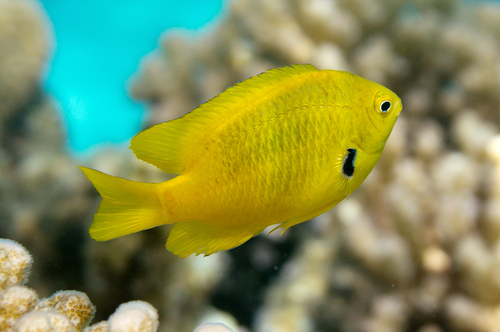 Pomacentrus sulfureus164 sightings
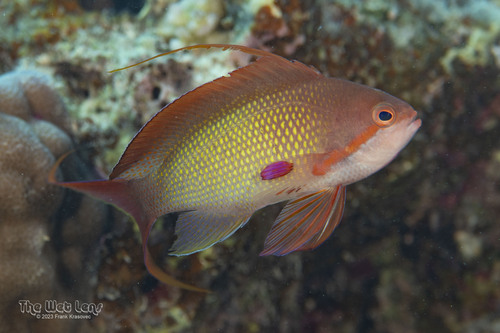 Pseudanthias squamipinnis152 sightings
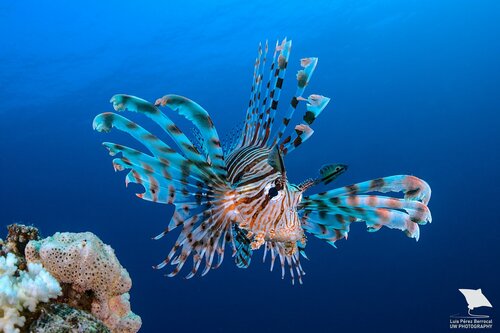 Pterois miles129 sightings
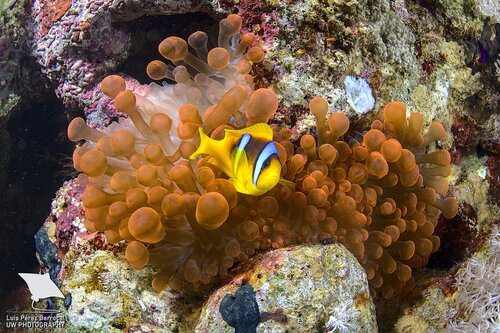 Amphiprion bicinctus124 sightings
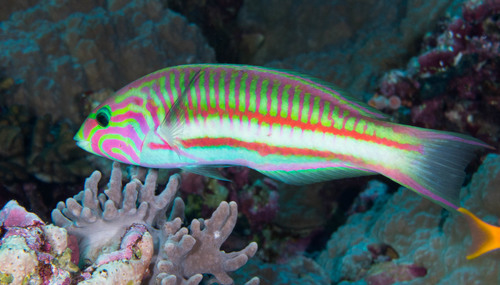 Thalassoma rueppellii116 sightings
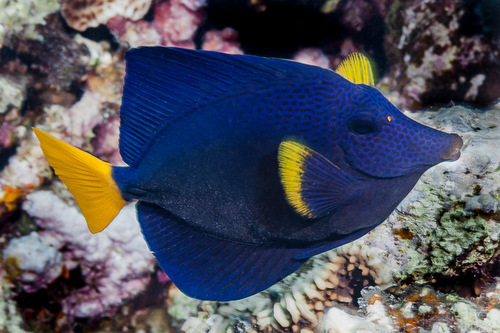 Zebrasoma xanthurum107 sightings
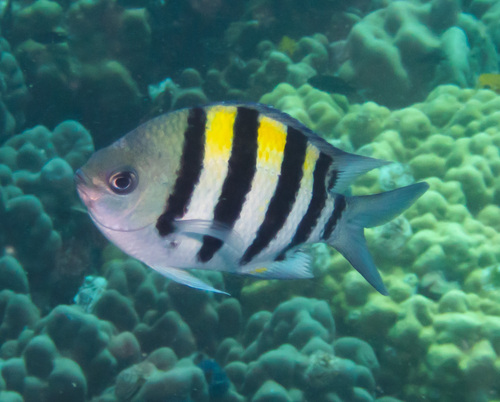 Abudefduf vaigiensis97 sightings
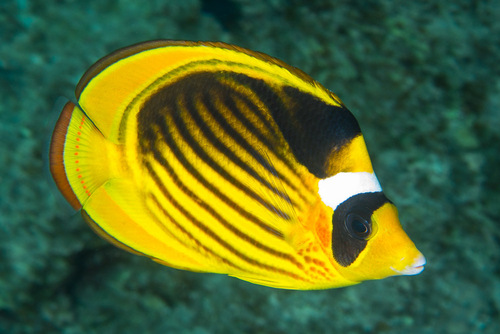 Chaetodon fasciatus94 sightings
Species come from iNaturalist — research-grade sightings logged by divers, snorkelers, and naturalists nearby. The ranking reflects what people photograph most, not guaranteed abundance. Ask a local operator what's actually being seen. Species names link to iNaturalist for range maps, seasonality and more photos. Photos by iNaturalist contributors under Creative Commons licences — individual credit on hover.