Manta Point
Nusa Penida, Bali, Indonesia · 8–20m · intermediate · exposed
Limestone cliff-base cleaning station with year-round reef manta visits, swell-dependent.
Conditions today
Retrieved · refreshed hourly
poor
Poor — decent morning demoted one level because conditions deteriorate over the ride-home window.
Limiting factor: waves
- Wave height
- 1.4–1.7m
- Wave period
- 10.1–14s
- Wind chop
- 0–0.1m
- Sea temp
- 26.1–26.8°C
Ranges span today's hours. Wave height here is the raw sea state — the rating scales it for how exposed the site is. Exposed — open water with nothing to block the swell, so it is scored at full height.
Next few days
- TodayPoor — decent morning demoted one level because conditions deteriorate over the ride-home window.poor
- SundayPoor — 2.0m effective waves in the morning window.poor
- MondayPoor — 2.4m effective waves in the morning window.poor
Each day is scored over its morning dive window, the same as today's rating.
Dive briefing
AI-generated
Conditions are rated poor today, with waves the limiting factor. Although the morning shows promise, conditions deteriorate over your ride-home window, which tips the day into poor territory. Raw wave heights are forecast at 1.4–1.7 metres with periods of 10.1–14 seconds; wind waves are negligible. Water temperature sits at 26.1–26.8°C. This is an exposed site at the base of a limestone cliff, and you'll need intermediate certification to dive the 8–20 metre depth range.
Reef mantas are commonly logged here and remain the headline attraction. Divers often record hawksbill sea turtles as well. The reef hosts moorish idols, blacklip butterflyfish, Clark's anemonefish, Pacific trumpetfish, striped surgeonfish, and semicircle angelfish. Make your call on whether the morning window justifies the deteriorating conditions on the return.
Written by Claude (claude-haiku-4-5-20251001) from the rating, forecast, and sightings on this page — it has no other source and cannot look anything up. Treat it as a summary, not as local knowledge.
Commonly seen here
Most-recorded species near this site, ranked by research-grade iNaturalist sightings from divers, snorkelers, and naturalists.
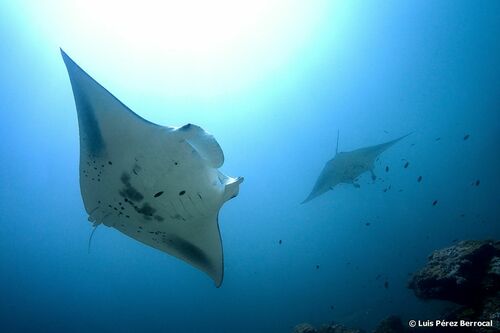 Mobula alfredi288 sightings
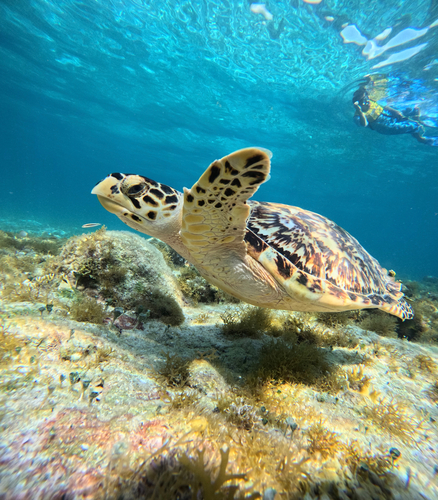 Eretmochelys imbricata198 sightings
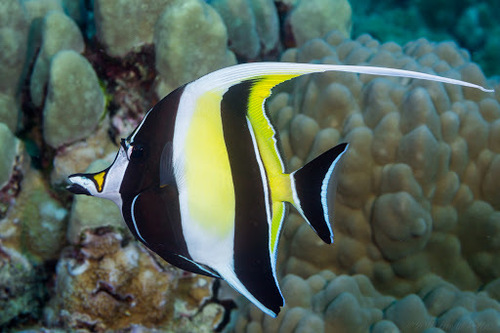 Zanclus cornutus186 sightings
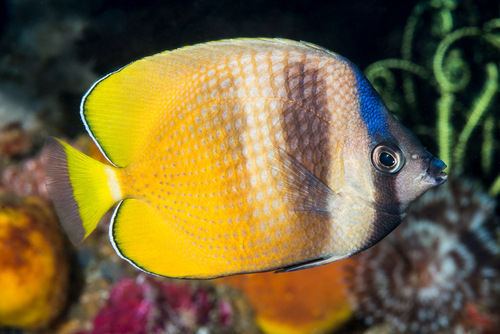 Chaetodon kleinii185 sightings
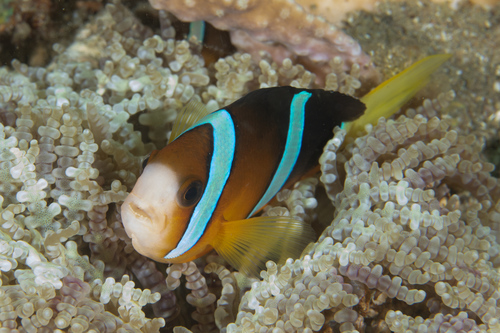 Amphiprion clarkii159 sightings
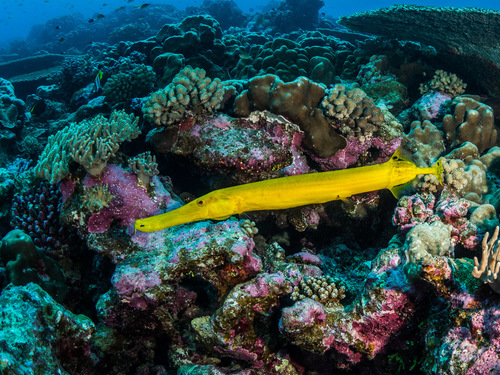 Aulostomus chinensis149 sightings
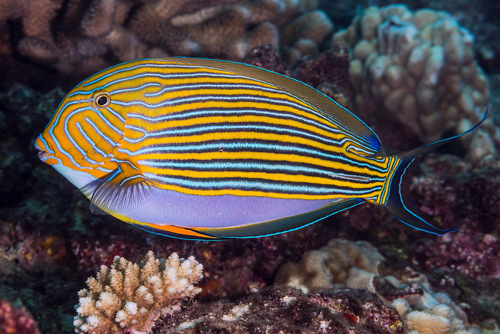 Acanthurus lineatus128 sightings
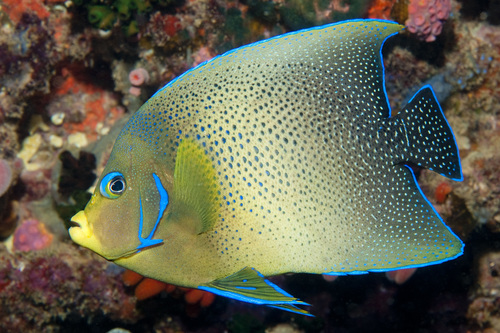 Pomacanthus semicirculatus120 sightings
Species come from iNaturalist — research-grade sightings logged by divers, snorkelers, and naturalists nearby. The ranking reflects what people photograph most, not guaranteed abundance. Ask a local operator what's actually being seen. Species names link to iNaturalist for range maps, seasonality and more photos. Photos by iNaturalist contributors under Creative Commons licences — individual credit on hover.