Poor Knights Islands
Northland, New Zealand · 10–35m · intermediate · semi
Subtropical archways and kelp walls where warm currents meet temperate seas — Cousteau's favourite temperate dive.
Conditions today
Retrieved · refreshed hourly
poor
Poor — 0.8m effective waves made worse by local wind chop.
Limiting factor: wind
- Wave height
- 0.9–1.4m
- Wave period
- 6–9.5s
- Wind chop
- 0.4–1.2m
- Sea temp
- 15.9–16°C
Ranges span today's hours. Wave height here is the raw sea state — the rating scales it for how exposed the site is. Semi-exposed — partial protection, so swell is scored at three-quarters of its open-water height.
Next few days
- TodayPoor — 0.8m effective waves made worse by local wind chop.poor
- MondayGood — 0.6m effective waves in the morning window.good
- TuesdayGood — 0.5m effective waves in the morning window.good
Each day is scored over its morning dive window, the same as today's rating.
Dive briefing
AI-generated
Conditions are poor today. Wind chop is the limiting factor, adding to 0.9–1.4m raw waves and making the water choppy on the surface. Expect 15.9–16°C water. You'll need intermediate certification and shelter from the wind; the site's semi-exposed position offers some protection but won't fully offset today's conditions. Depths run 10 to 35 metres across the archways and kelp walls.
Divers commonly log Cook's Scorpionfish, Estuarine Triplefin, and New Zealand Demoiselle here, along with Eastern King Wrasse, Australasian Snapper, Violet Sweep, Eastern Pigfish, and Common Triplefin. The mix shifts with conditions and season, so treat sightings as possible rather than certain.
Written by Claude (claude-haiku-4-5-20251001) from the rating, forecast, and sightings on this page — it has no other source and cannot look anything up. Treat it as a summary, not as local knowledge.
Commonly seen here
Most-recorded species near this site, ranked by research-grade iNaturalist sightings from divers, snorkelers, and naturalists.
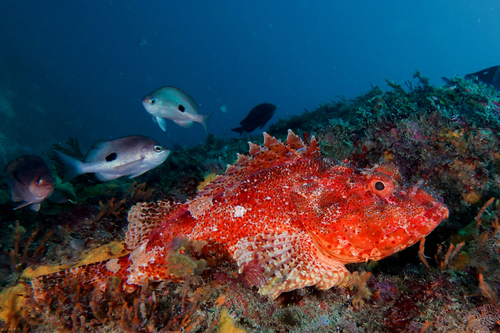 Scorpaena cardinalis221 sightings
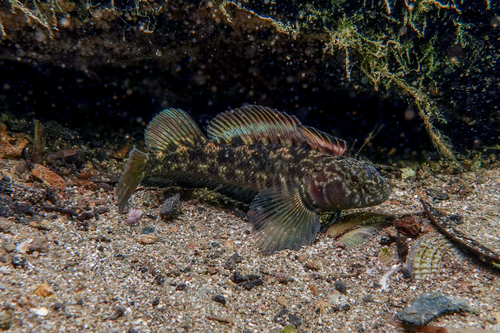 Forsterygion nigripenne218 sightings
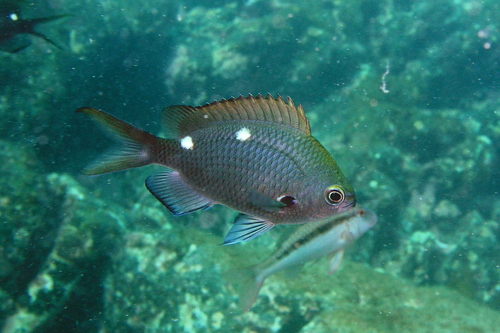 Chromis dispila168 sightings
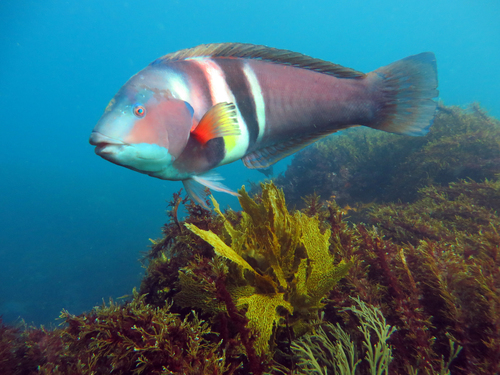 Coris sandeyeri154 sightings
- no photoChrysophrys auratus145 sightings
- no photoScorpis violacea142 sightings
- no photoBodianus unimaculatus131 sightings
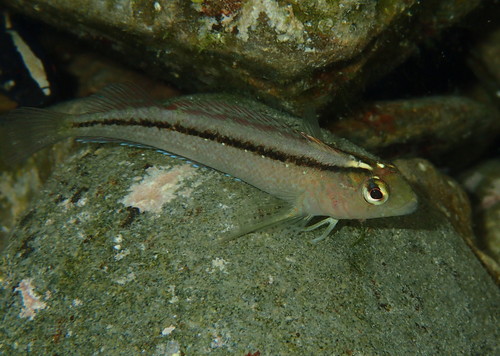 Forsterygion lapillum128 sightings
Species come from iNaturalist — research-grade sightings logged by divers, snorkelers, and naturalists nearby. The ranking reflects what people photograph most, not guaranteed abundance. Ask a local operator what's actually being seen. Species names link to iNaturalist for range maps, seasonality and more photos. Photos by iNaturalist contributors under Creative Commons licences — individual credit on hover.