Spotted Bay
Utila, Bay Islands, Honduras · 10–30m · intermediate · exposed
North-side bay reef, dived when the trades ease.
Conditions today
Retrieved · refreshed hourly
marginal
Marginal — 0.8m effective waves made worse by short-period chop.
Limiting factor: period
- Wave height
- 0.6–0.9m
- Wave period
- 4.9–5.6s
- Wind chop
- 0–0.3m
- Sea temp
- 30.3–30.8°C
Ranges span today's hours. Wave height here is the raw sea state — the rating scales it for how exposed the site is. Exposed — open water with nothing to block the swell, so it is scored at full height.
Next few days
- TodayMarginal — 0.8m effective waves made worse by short-period chop.marginal
- FridayMarginal — 0.7m effective waves made worse by short-period chop.marginal
- SaturdayMarginal — 0.7m effective waves made worse by short-period chop.marginal
Each day is scored over its morning dive window, the same as today's rating.
Dive briefing
AI-generated
Conditions are marginal today. The forecast shows raw wave heights of 0.6–0.9m with a short period of 4.9–5.6 seconds, which creates choppy conditions on this exposed reef. The limiting factor is that short-period swell, which makes the water uncomfortable despite modest wave sizes. You'll be diving depths between 10 and 30 metres on a north-side reef; the site suits intermediate certification. Water temperature is a warm 30.3–30.8°C.
Divers commonly log stoplight parrotfish and spotted eagle rays here, along with schoolmaster snapper, Atlantic blue tang, hawksbill sea turtles, queen angelfish, Caribbean bluehead wrasse, and western Atlantic trumpetfish. Today's chop will likely affect visibility and comfort in the shallows, but the reef itself will be there. Only commit if you're comfortable in lumpy water.
Written by Claude (claude-haiku-4-5-20251001) from the rating, forecast, and sightings on this page — it has no other source and cannot look anything up. Treat it as a summary, not as local knowledge.
Commonly seen here
Most-recorded species near this site, ranked by research-grade iNaturalist sightings from divers, snorkelers, and naturalists.
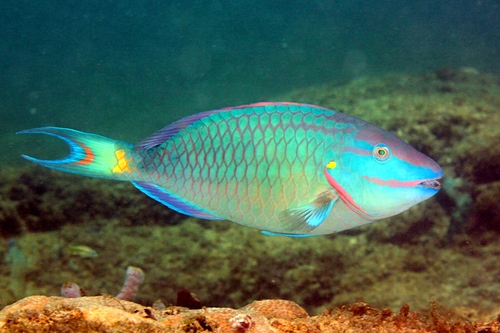 Sparisoma viride84 sightings
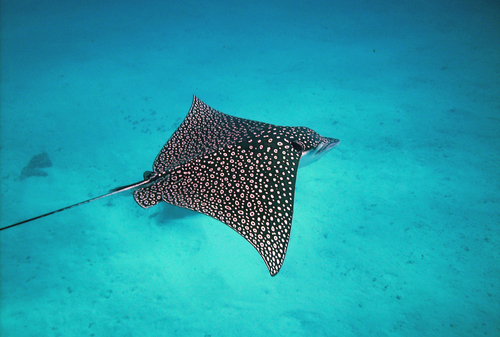 Aetobatus narinari72 sightings
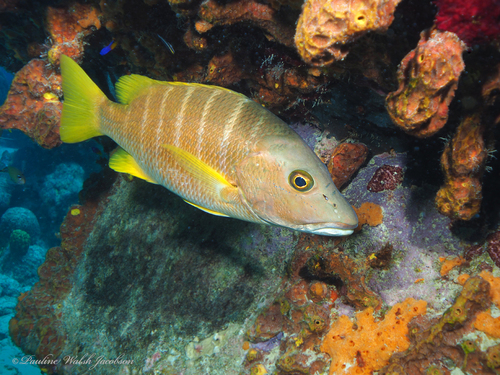 Lutjanus apodus66 sightings
- no photoAcanthurus coeruleus64 sightings
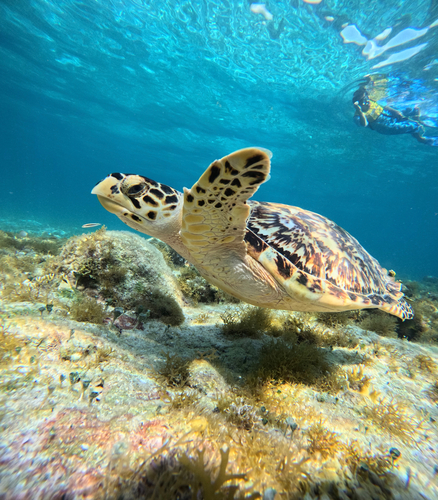 Eretmochelys imbricata59 sightings
- no photoHolacanthus ciliaris59 sightings
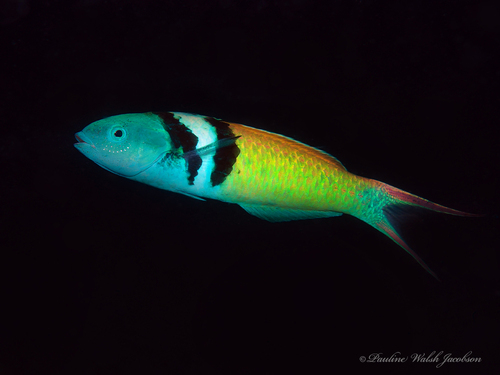 Thalassoma bifasciatum54 sightings
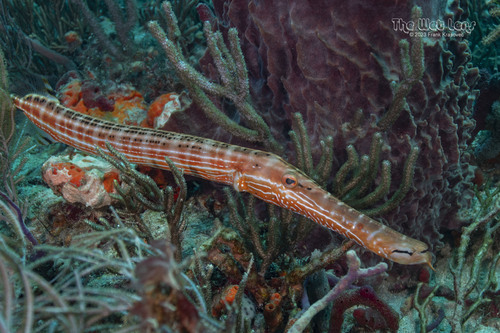 Aulostomus maculatus53 sightings
Species come from iNaturalist — research-grade sightings logged by divers, snorkelers, and naturalists nearby. The ranking reflects what people photograph most, not guaranteed abundance. Ask a local operator what's actually being seen. Species names link to iNaturalist for range maps, seasonality and more photos. Photos by iNaturalist contributors under Creative Commons licences — individual credit on hover.
Other sites nearby
Within 25km, closest first — usually the same day's boat.